The Price of Eternity
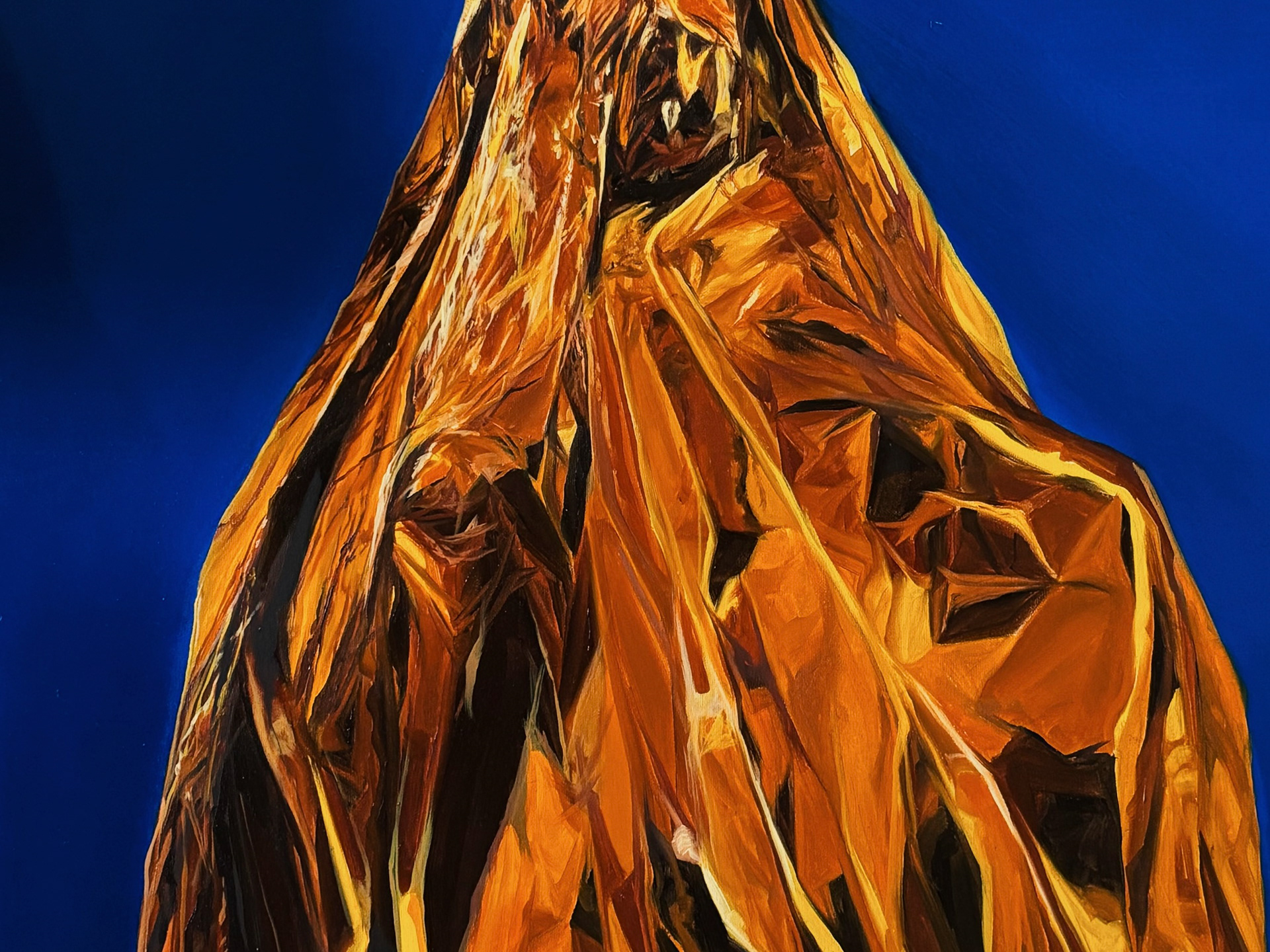
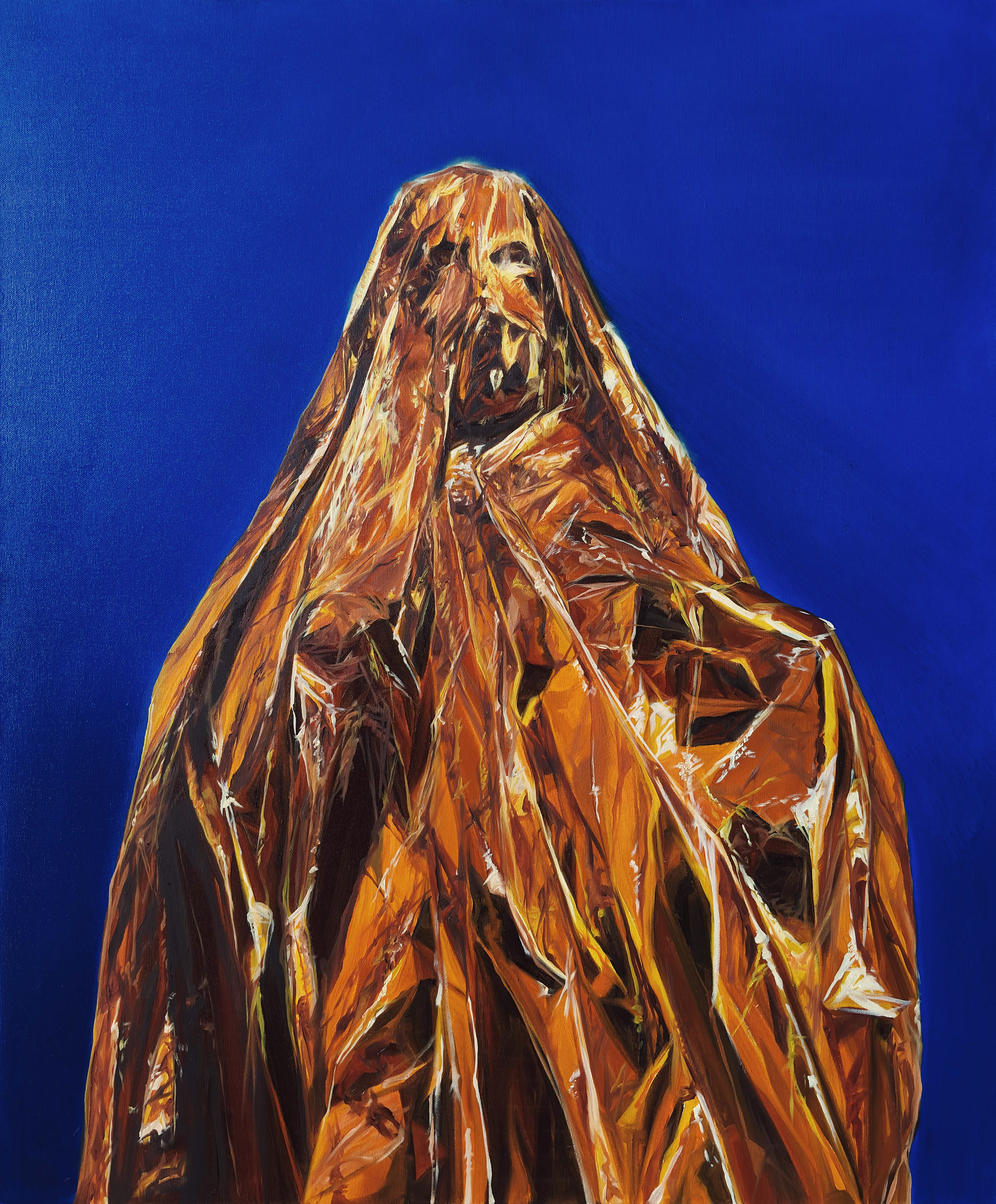
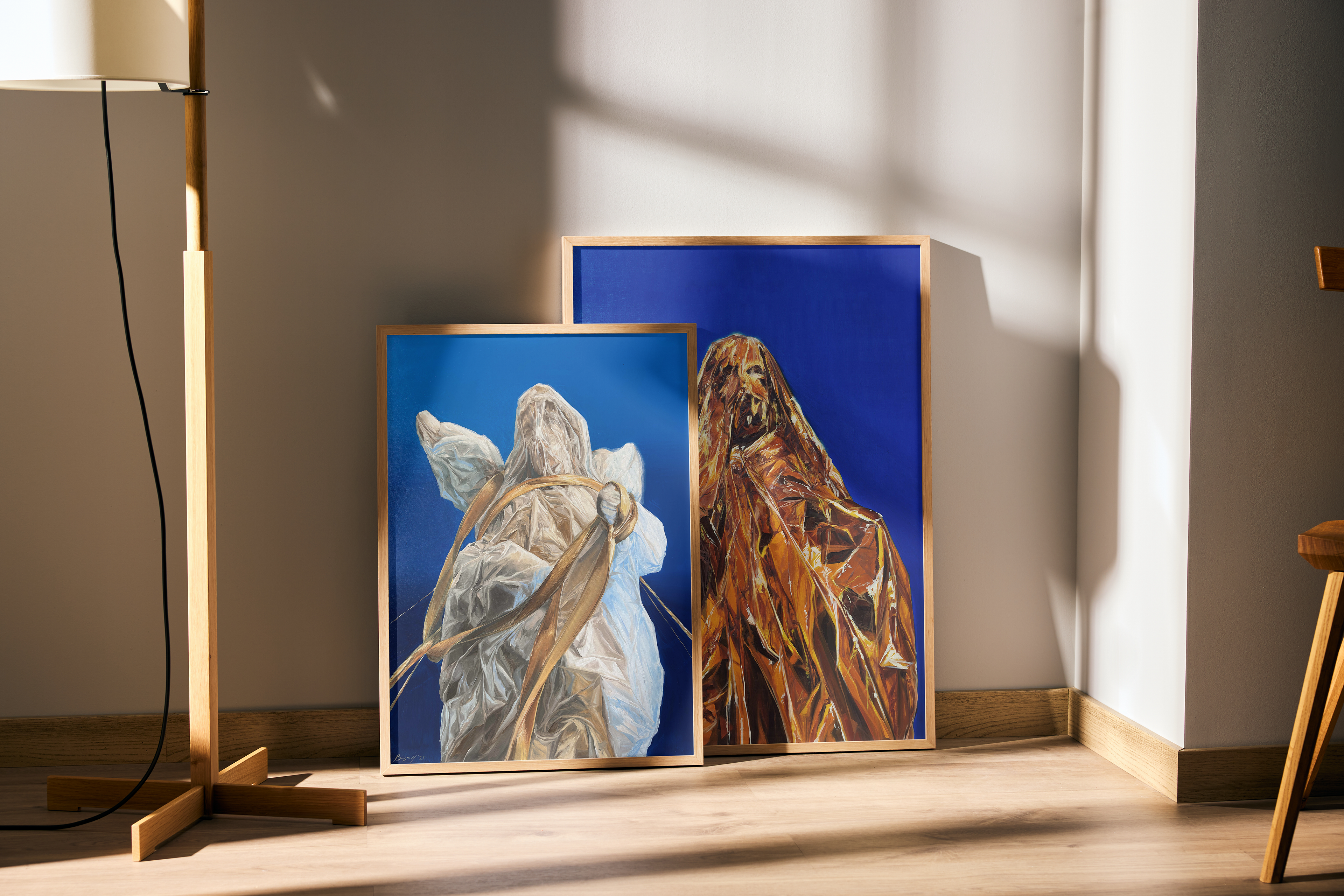
A body wrapped in brilliance stands against the vastness of blue. The foil gleams, sharp and immaculate, drawing the eye toward its complicated surface. Yet the more it shines, the more it withholds. Radiance becomes a mask; what should be revealed retreats into folds of concealment.
Gold here is never neutral. It dazzles as adornment and suffocates as a shroud. It is at once incorruptible and corrupting, sacred and transactional, eternal and unbearably fragile. In its shimmer lies the weight of paradox: light that blinds, value that imprisons, beauty that closes in upon itself.
There is no gesture, and no utterance. Only the stillness of something preserved, sealed, suspended. What was once promised now feels deferred, caught between reverence and possession. The figure is there, yet not accessible; luminous, yet unreachable. And yet, even within this silence, echoes remain. Pope Francis once warned: “As long as the Church is placing its hope on wealth, Jesus is not there. It’s an NGO for charity or culture... Poverty is at the center of the gospel.” His words reverberate as questions, not conclusions. If radiance itself becomes enclosure, if eternity must carry a price, then what is left of salvation; and who, if anyone, can touch it?
The Weight of Remedy
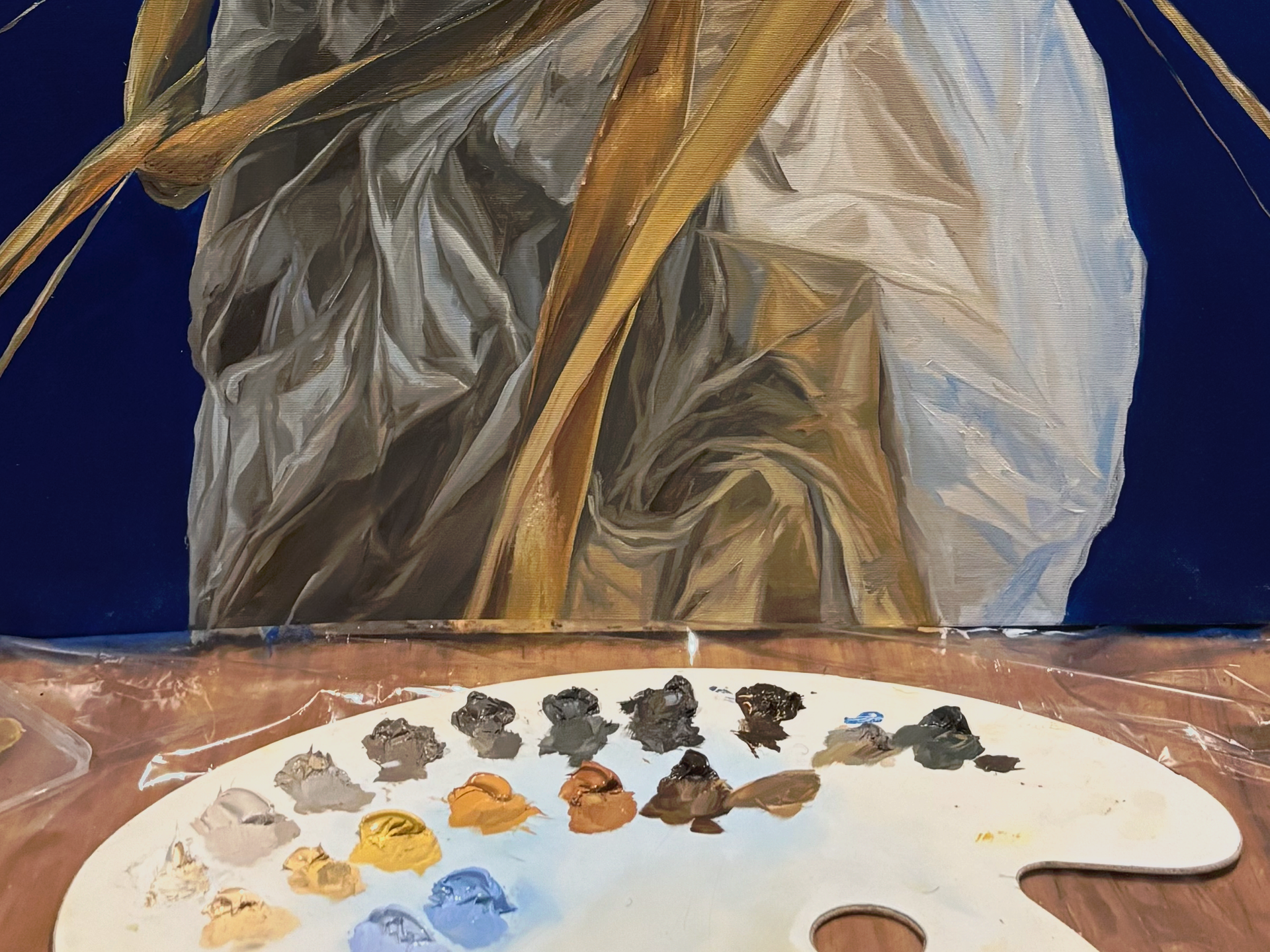
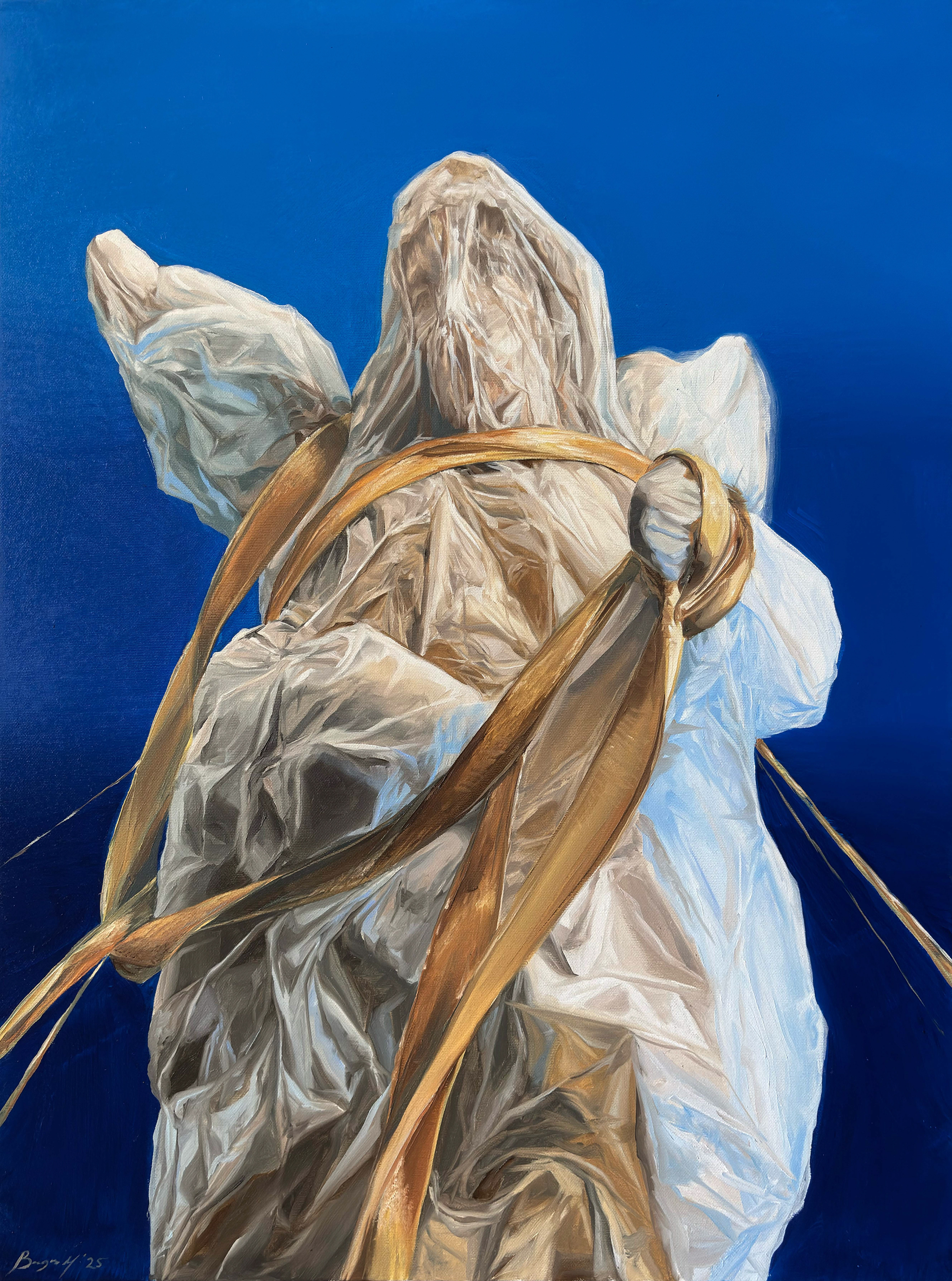
Hands bound, a gesture withheld. What should extend outward–towards healing–remains arrested in a tension. The ribbons glint as if precious, yet they constrict with quiet severity. Remedy, it seems, is not weightless; it is heavy, costly, and fragile.
The image hovers between promise and paralysis. Healing is not denied, but deferred, suspended in the distance between what could be touched and what is withheld. It is a presence that aches precisely because it cannot yet arrive.
The golden ties shimmer like inheritance, but inheritance that cannot be shared. They remind us that remedy does not float freely in the world; it drags with it the ballast of access, of cost, of gatekeeping. Healing becomes a question of power: who may receive, and who must remain waiting. Simone Weil once wrote, “Affliction hardens and discourages us because, like a flame, it consumes what is best in us. Only grace allows it not to do so.” In this work, the absence of grace becomes palpable. The possibility of release lingers, but the knots hold fast. If remedy is bound, what weight must be carried until its promise is unfastened?