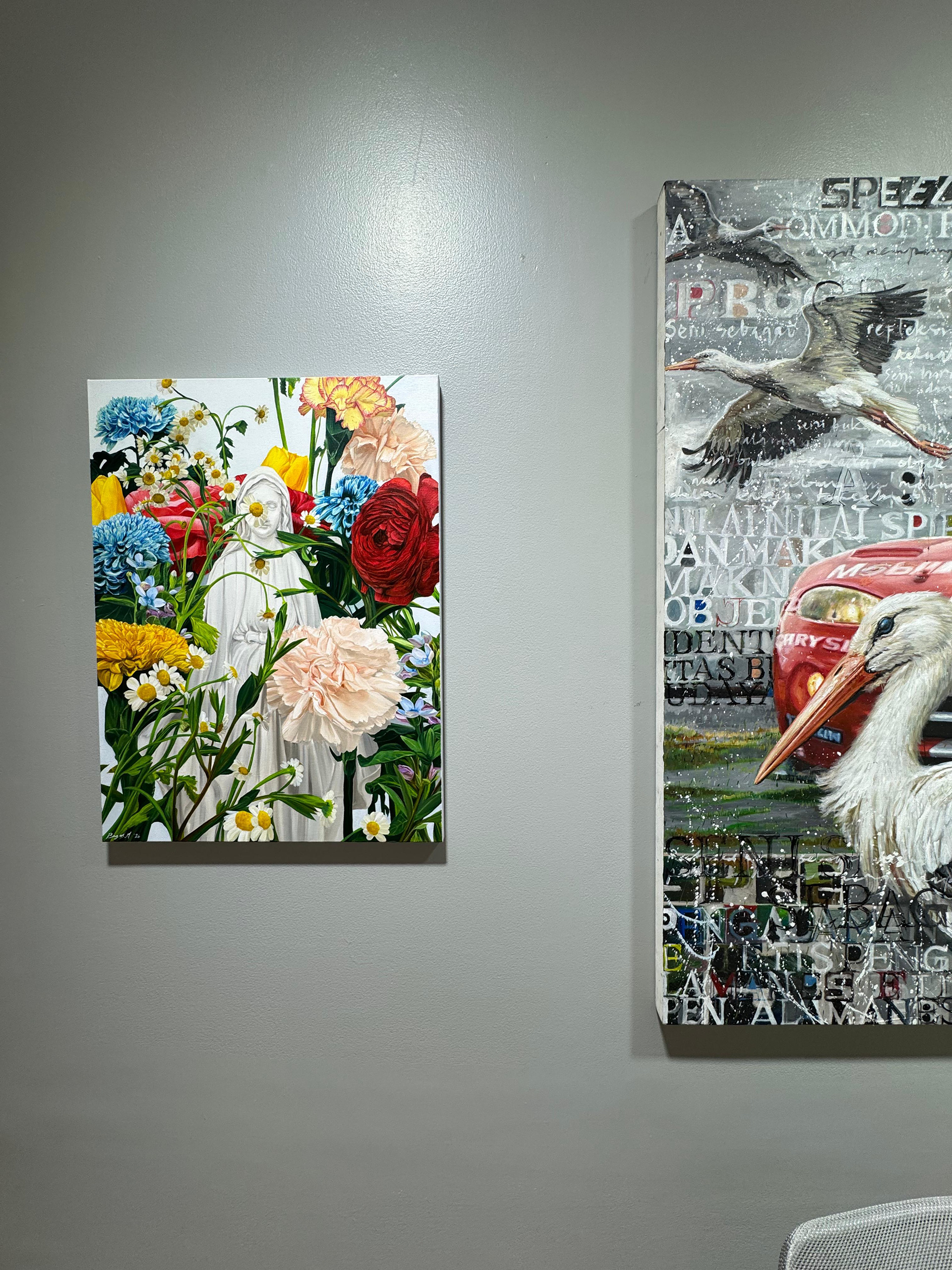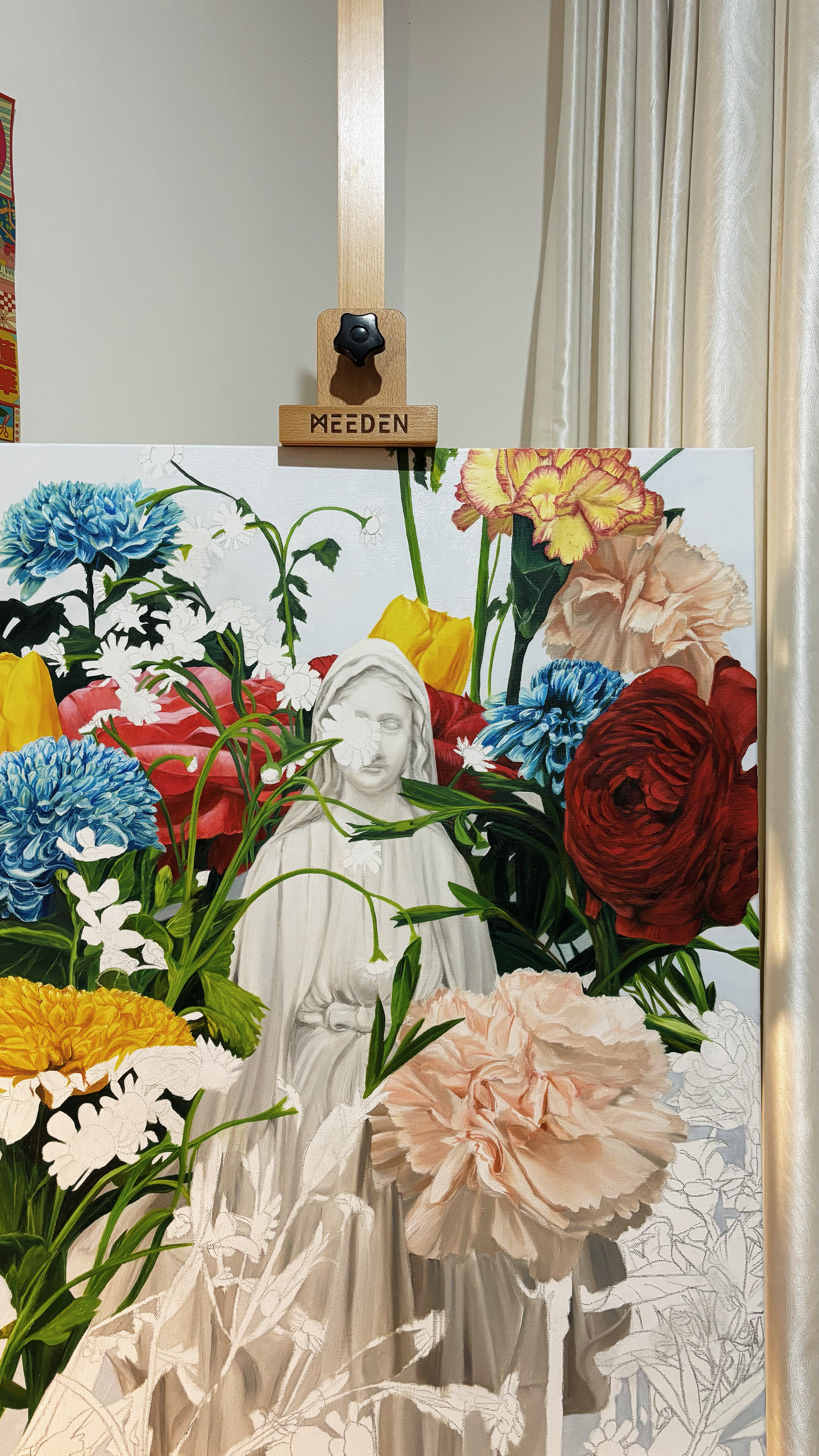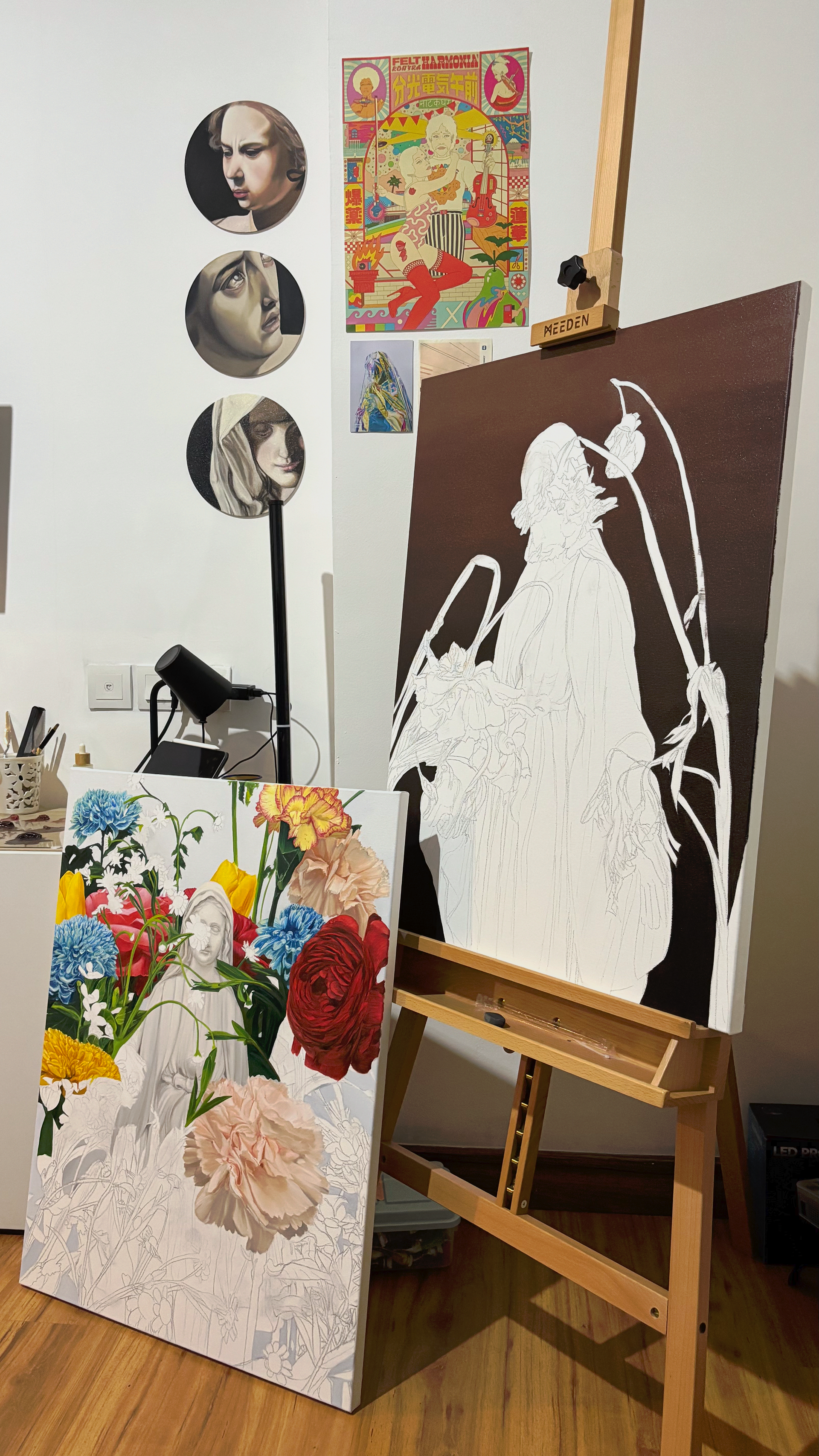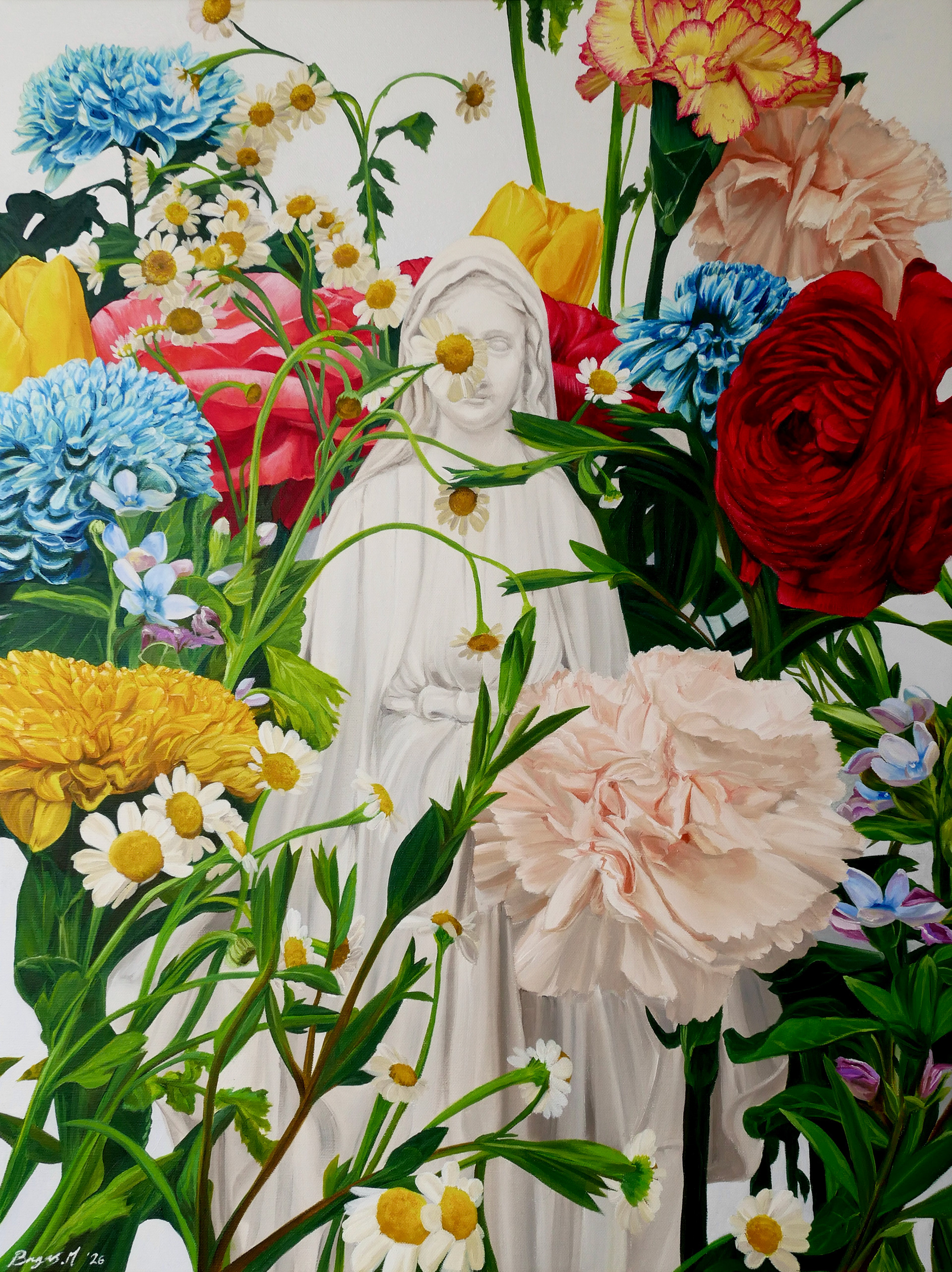
I Thought Something Beautiful Would Save Me, Oil on Canvas, 80 x 60 cm, 2026
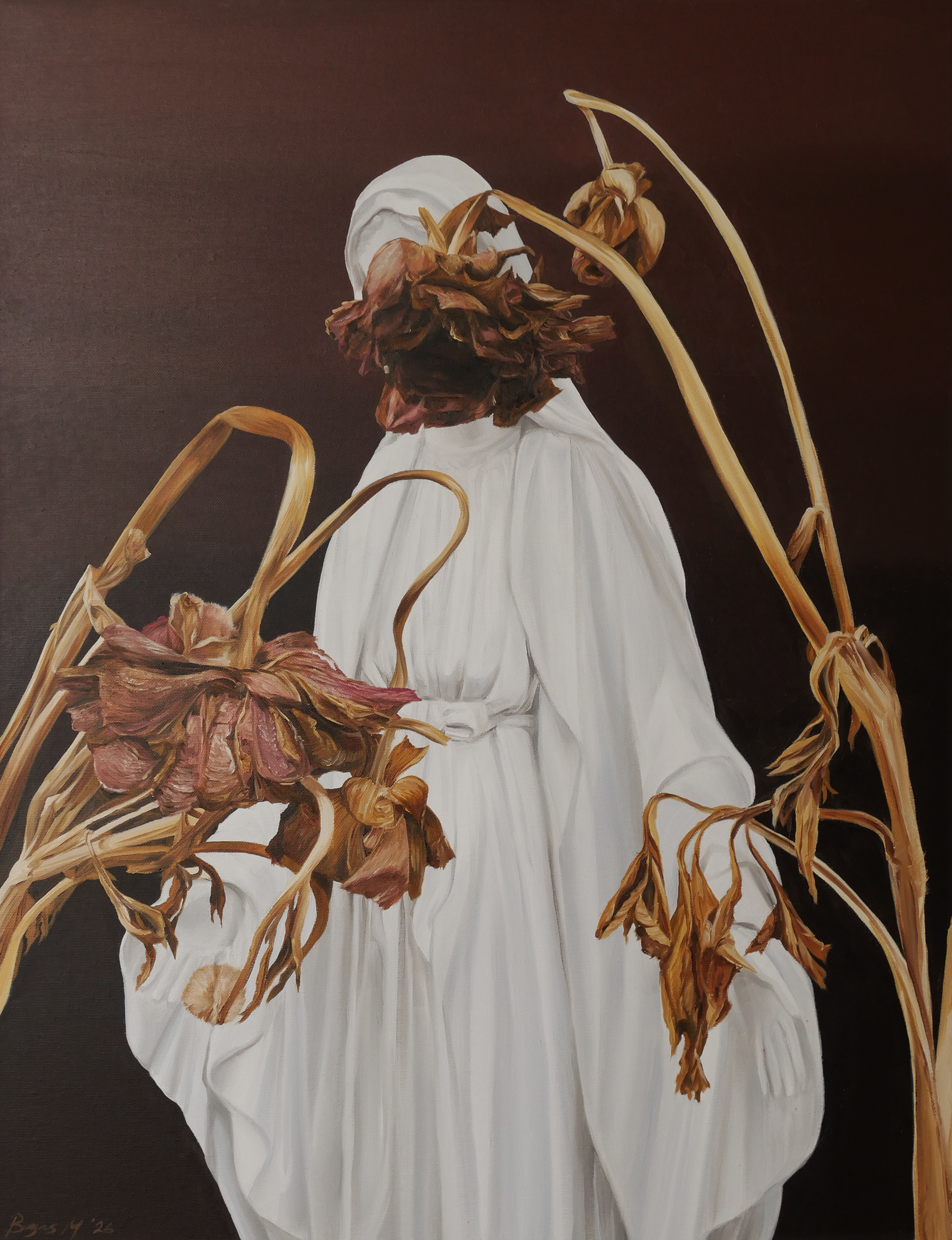
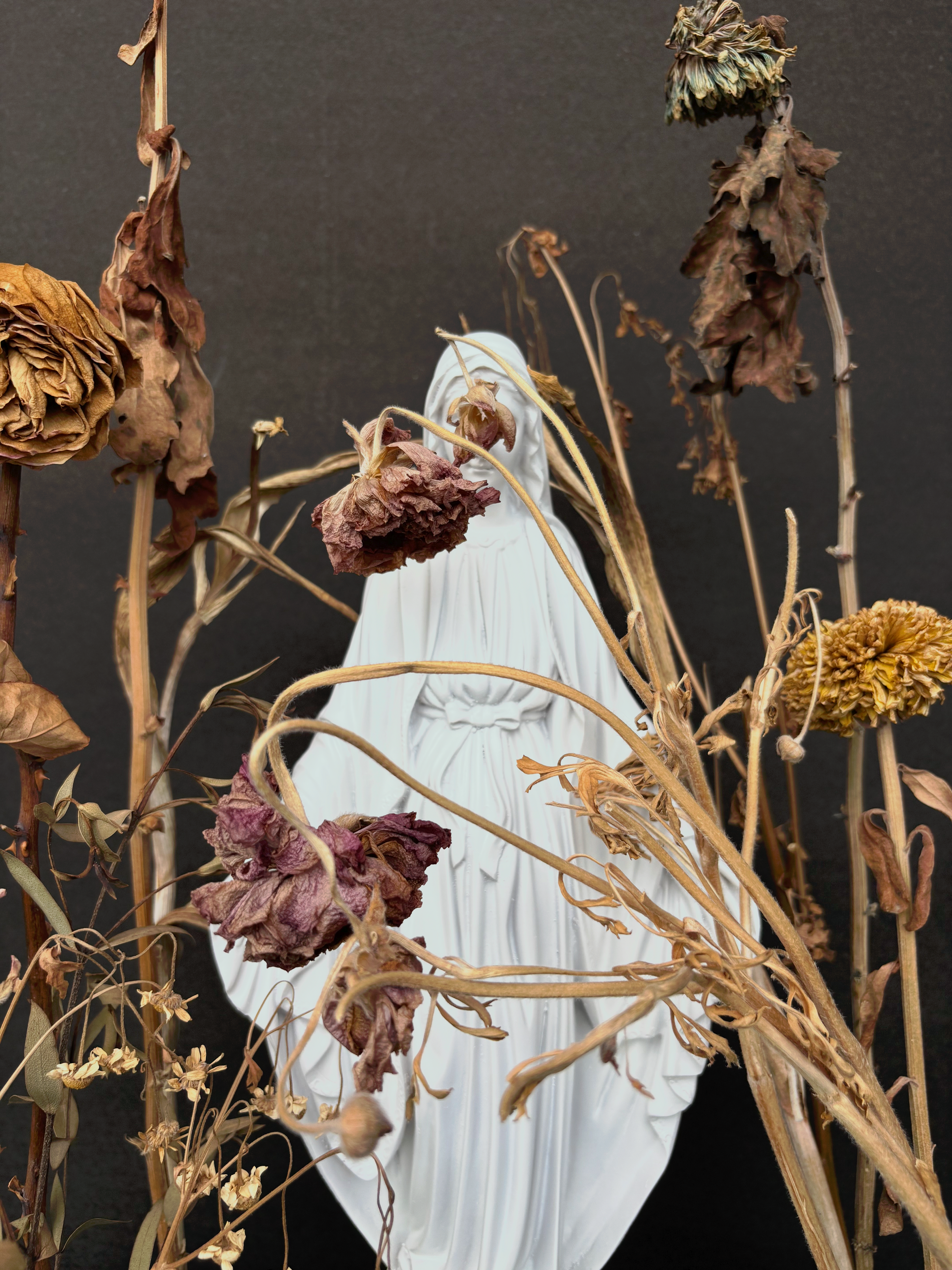
Still, I Pray Even When Nothing Comes, Oil on Canvas, 80 x 60 cm, 2026
I Thought Something Beautiful Would Save Me
(2026)
She stands in stillness, surrounded by an abundance that feels both tender and excessive.
Flowers gather around the Virgin like offerings, like inherited prayers, like the quiet insistence
that beauty must mean grace. Their bloom is seductive, lush, ornamental, almost too perfect, as
if devotion itself has been arranged into something visible, something presentable, something
meant to reassure.
Here, faith still reaches outward. It believes in nearness, in the possibility that the sacred will
answer if one waits long enough, prays deeply enough, loves beautifully enough. The figure
remains calm within this overgrowth, neither resisting nor yielding, holding the fragile space
between hope and expectation.
In this suspended moment, devotion exists as an image: inherited, performed, and offered with
sincerity. The flowers do not simply adorn her, they reveal our desire for transcendence, and our
longing for beauty to become proof that we are being watched, and perhaps, saved. But when
beauty feels so carefully arranged, are we witnessing faith, or only our need for it?
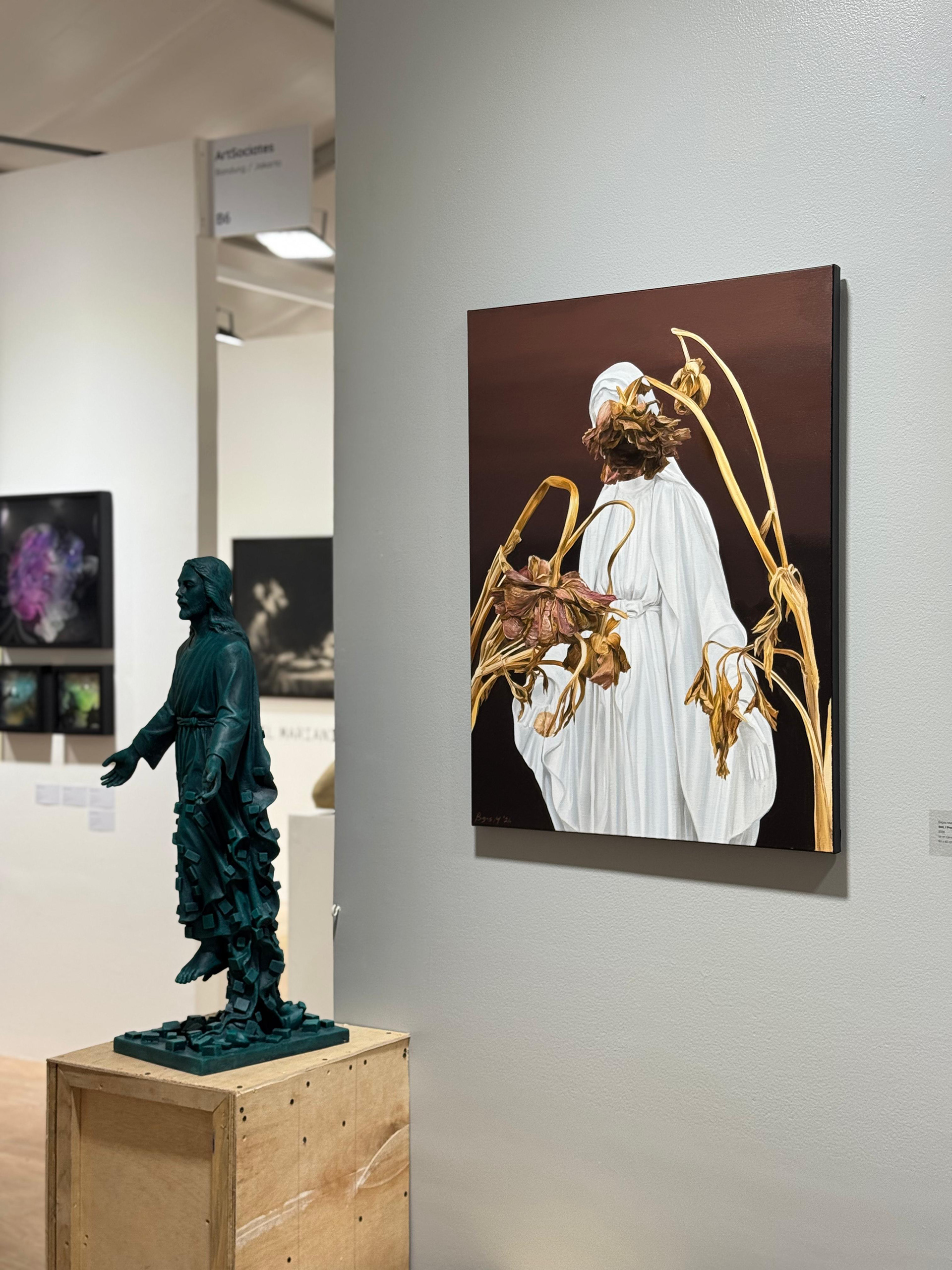
Still, I Pray Even When Nothing Comes
(2026)
The flowers have withered, and with them, the promise that beauty alone could redeem. What
remains is quieter: fewer gestures, softer color, a heavier stillness. The Virgin no longer appears
as a figure of immediate consolation. Her face is obscured by a dying bloom, an intimate veil
that denies the viewer the comfort of recognition.
In religious imagery, the face is where grace is usually found. To cover it is not an act of erasure,
but of transformation. Presence remains, but clarity does not. The sacred is still here, though it
no longer performs certainty. It asks instead for endurance, for the kind of faith that survives
without spectacle, without miracle, without being seen.
This is prayer after disillusionment, not a request to be saved, but the decision to remain. If the
first work lives in expectation, this one lives in acceptance. It understands that sometimes no
answer arrives, and yet devotion persists, not because it promises rescue, but because it refuses
abandonment. When no miracle comes, what does it mean to keep praying anyway?